The Pause Button Problem: NBA Coaches Have Turned Timeouts Into a Cheat Code
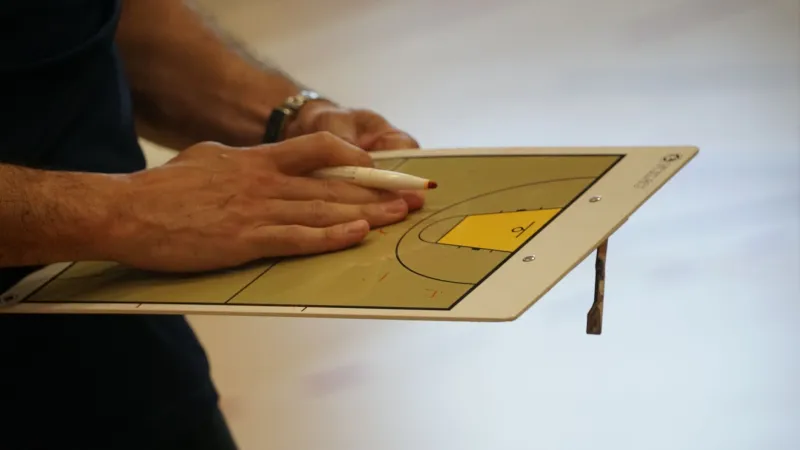
Somewhere along the way, the timeout stopped being a breather and started being a bailout.
Watch enough NBA basketball — really watch it, not just the highlights — and you'll start noticing a pattern that's hard to unsee. A point guard is pushing in transition, the defense is scrambling, and the moment the ball crosses half court, a coach on the sideline fires his hands into a T. Dead ball. Reset. Advantage: gone. Repeat this five or six times a game and you've got a product that's technically within the rules but fundamentally broken in ways the competition committee doesn't seem particularly eager to address.
The timeout was designed as a tactical pause. A chance to draw up a play, sub fresh legs in, or calm a team down when things are spiraling. What it has become, in the hands of modern NBA coaches, is something closer to a get-out-of-jail-free card — and it's quietly chipping away at what makes basketball worth watching.
The Defensive Foul Dodge
Here's the one that doesn't get enough attention: the timeout called specifically to avoid a defensive foul.
It happens constantly. An offensive player catches a defender out of position — maybe he's been beaten off the dribble, maybe he's scrambling back in transition — and rather than contest the shot and risk a foul call, the defensive team's coach calls timeout. The play dies. The advantage evaporates. The rulebook says nothing about intent, so nothing happens.
This is a problem because it's essentially allowing teams to nullify the consequences of bad defense. If you get beat, you should get beat. That's how basketball is supposed to work. The foul is the natural outcome of a defender making a desperate play. The timeout short-circuits that entire sequence. It's not clever coaching — it's a loophole, and the league has been remarkably comfortable leaving it open.
The NFL figured this out, at least partially, with rules around calling timeouts to ice kickers. The NBA hasn't had a similar reckoning. And it shows.
Manufacturing Matchups on the Fly
Then there's the matchup game, which has gotten genuinely absurd at the highest level.
Coaches now use timeouts in the final minutes of close games not to advance strategy, but purely to swap personnel. You bring in your closer. The other coach calls timeout, makes a counter-move. You call timeout again. Suddenly, what should be two minutes of basketball stretches into twelve minutes of actual clock time, with the ball barely touched between whistles.
This isn't entirely new — late-game chess has always existed — but the frequency and shamelessness of it has escalated dramatically. Teams are essentially burning timeouts as a currency to shop for favorable personnel matchups, and the game suffers for it. Casual fans tune out. Momentum, which is the lifeblood of basketball, flatlines.
The irony is that these timeout exchanges often cancel each other out. Both teams end up with the matchup they started with, just minus two timeouts and about four minutes of everyone's evening.
The Momentum Kill Is a Feature, Not a Bug
Let's talk about the most cynical use of the timeout: the deliberate momentum disruption.
Your opponent just hit three straight threes. The crowd is loud. Their bench is up. The energy has shifted completely. What do you do? You call timeout immediately — not because you have a play to draw up, not because your guys need a rest, but purely to interrupt the psychological wave your opponent is riding.
Coaches will openly admit this is the goal. Stop the bleeding. Break the rhythm. It works, and that's exactly the issue. Because what you're really doing is using a structural mechanic of the game to override something organic — a team finding its groove, a player getting hot, a crowd feeding energy into the building. You're not countering basketball. You're pausing it.
There's a version of this that's legitimate coaching. But the version that exists in today's NBA — where coaches are trained to pull the cord the instant anything goes against them — has turned into a reflexive habit that bloats game times and flattens the natural arc of competition.
What the Numbers Don't Capture
Here's the frustrating part: this is almost impossible to quantify in a way that generates outrage.
You can't look at a box score and see "timeouts abused: 4." There's no metric for momentum killed or fouls avoided. The analytics community, for all its sophistication, hasn't cracked the code on measuring what a timeout actually costs the other team when it's used cynically. So the problem flies under the radar, buried beneath legitimate tactical analysis and coaching praise.
And coaches are smart. They know what they're doing. When Erik Spoelstra or Steve Kerr calls a timeout that looks suspiciously convenient, they'll explain it in terms of rest, matchups, or execution. The strategic cover is always there. The rulebook doesn't care about motive.
The Fix Nobody Wants to Implement
There are workable solutions here, and the league knows it.
The NBA's G League experimented with a trimmed timeout structure — fewer timeouts, shorter durations, restrictions on when they can be called. The results were encouraging. Games moved faster. Momentum held longer. The basketball looked more like basketball.
The simplest fix would be limiting timeouts in the final two minutes of regulation and overtime, similar to how the NFL limits them. Another option: ban timeouts entirely when the ball is in the frontcourt and actively in play — if your defender got beat, live with the consequences.
Will any of this happen? Probably not quickly. The coaches union likes the current system. Broadcasters, frankly, benefit from the extra ad inventory those stoppages create. And the league has been slow to make changes that could upset the competitive balance coaches have built their careers around exploiting.
The Bigger Picture
None of this is going to end basketball as we know it. The timeout abuse problem isn't existential — it's more like a slow leak in a tire. You can keep driving, but the ride gets worse over time.
What it does represent is a broader pattern in the NBA, where the gap between what the rulebook allows and what the rulebook intended keeps widening. Smart coaches find the edges. The league watches. Fans notice something feels off but can't quite name it.
The timeout was supposed to be a tool. It became a weapon. And until the league decides to put some guardrails on how and when coaches can deploy it, the pause button will keep getting pressed — not to help teams play better basketball, but to make sure the other team can't.