Soccer's Worst Enemy Isn't a Bad Ref — It's the Screen Above His Head
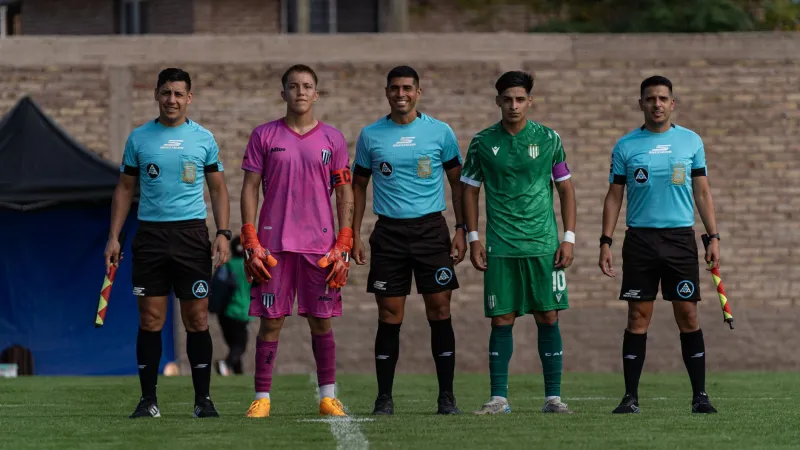
The Moment the Goal Died
You know the feeling. Your striker tucks it into the bottom corner. The stadium erupts. You're off the couch, spilling your beer, screaming at nobody in particular. And then — nothing. The referee jogs toward the center circle with one finger pointed at his earpiece, and the entire world holds its breath for three minutes while a guy in a van somewhere in New Jersey squints at a freeze-frame of a left armpit.
Welcome to modern soccer. Population: frustrated.
Video Assistant Referee — VAR, for those who've somehow avoided the discourse — was introduced to MLS in 2017 and has since become the most divisive piece of technology in American sports since the Hawk-Eye line-call system in tennis. The stated goal was noble enough: eliminate the kind of howler mistakes that alter the outcome of matches. What nobody anticipated was that fixing those mistakes would require dismantling the very thing that makes soccer worth watching in the first place.
What VAR Actually Does to a Broadcast
Let's be brutally honest about what the average American soccer fan experiences on a Saturday afternoon. You sit down for a 90-minute match. By the time you factor in stoppage time, injury delays, and the inevitable VAR reviews, you're looking at something closer to two hours and twenty minutes of television. That's not a soccer game anymore — that's a mid-season episode of a prestige drama, except the pacing is worse and nobody gets a character arc.
In the 2023 MLS Cup Playoffs alone, there were multiple instances where VAR reviews lasted longer than four minutes for a single call. Four minutes. In a sport built on rhythm, momentum, and the kind of breathless back-and-forth that makes a 1-0 game feel like a thriller, four minutes of dead air is a death sentence for casual viewers.
And those casual viewers matter enormously right now. Soccer is in a genuine growth phase in the United States. The USMNT is building toward the 2026 World Cup on home soil. Lionel Messi brought Inter Miami — and by extension MLS — to a level of mainstream attention the league had never seen. New fans are coming in. And what are they getting greeted with? A referee staring at a tablet while 60,000 people stand around awkwardly.
The Calls That Broke People
The frustration isn't abstract. There are specific moments that have calcified into symbols of VAR's dysfunction.
During the 2022 World Cup — watched by tens of millions of Americans rooting for the USMNT — the United States had a goal against Portugal controversially reviewed and ultimately disallowed in group play. The delay was excruciating. The explanation was incomprehensible to anyone without a UEFA rulebook and a law degree. The call itself remains disputed by analysts to this day.
In MLS, the Philadelphia Union and New England Revolution played out a 2022 playoff match where two separate VAR interventions in the second half completely disrupted what had been a genuinely gripping contest. Both decisions were technically defensible. Neither felt like justice. And the crowd — which had been electric — went flat in a way that never quite recovered.
That's the hidden cost nobody tallies: the emotional momentum that evaporates during a review. Soccer crowds are instruments. They build pressure, they create atmosphere, they make the sport feel like something bigger than a game. VAR doesn't just pause the action — it punctures the balloon.
The Offside Line Nobody Can See
If there's one specific VAR application that has driven American fans to the edge of sanity, it's the automated offside technology. The system draws digital lines across the field to determine — down to fractions of an inch — whether a forward's shoulder, elbow, or big toe was marginally ahead of the last defender.
Here's the thing: the human eye cannot perceive these differences in real time. No referee could ever have caught them. Which means VAR isn't correcting human error anymore — it's inventing a new standard of precision that the sport was never designed to meet. A goal that looks legal to every person in the stadium, to every analyst in the booth, and to common sense itself gets chalked off because of a pixel-width toe.
At what point does "accuracy" become its own form of injustice?
What We Actually Loved About Soccer
Ask any lifelong soccer fan what drew them to the sport and they'll tell you some version of the same story. It was the flow. The way a game breathes. The tension of a scoreless match that somehow feels like the most important thing happening on earth. The chaos of a last-minute winner that nobody saw coming. The referee making a bad call and the crowd losing their minds and the game moving on anyway, because that's life, and soccer has always been a little bit like life.
None of that survives VAR at its current implementation. The sport has traded its soul for the appearance of fairness, and the deal was bad.
Other major American sports have instant replay, sure. But the NFL's challenge system puts agency in coaches' hands and caps the number of reviews. MLB's replay system is generally reserved for close plays with clear visual evidence. Neither sport has built a parallel bureaucracy that can reach into the game at any moment and retroactively void your happiness.
Is There a Fix?
Some leagues in Europe have already started pulling back. The English Premier League has made noise about limiting VAR's scope, particularly on the offside calls that have become a punchline. IFAB, the body that governs the laws of the game, is reportedly revisiting the framework.
For American fans specifically, the solution might be simpler: limit VAR to clear and obvious errors — the kind of mistake that changes a result and insults the intelligence of everyone watching. Egregious handball in the penalty area? Fine. A striker who was two yards offside? Absolutely. But a toenail? A shoulder blade? Let it go.
Soccer was never a sport that promised perfection. That was part of the deal. The bad calls, the disputed goals, the goalkeeper controversies — they became folklore. They became the stories you tell at the bar fifteen years later. VAR doesn't just erase the mistakes. It erases the mythology.
And for a sport still fighting for hearts and minds in the United States, mythology might be the most important thing it has.