The Plays Nobody Talks About: Breaking Down the Hidden Moments That Actually Decide Games
Turn on any postgame show and you'll get the same highlight package every time. The big touchdown. The strip sack. The walk-off field goal. Those plays are real, and they matter — but they're also the last chapter of a story that started way earlier and way quieter than anyone on television is going to admit.
The truth is, most NFL games are decided by stuff that doesn't make the cut for SportsCenter. A second-quarter run play that gains four yards but resets a defense's alignment. A corner bailing too early on a route that never comes. A center making a protection call that saves a quarterback from a blindside hit nobody notices because the hit never happens.
Those are the moments worth breaking down. And that's exactly what we're doing here.
The Run That Doesn't Look Like Anything
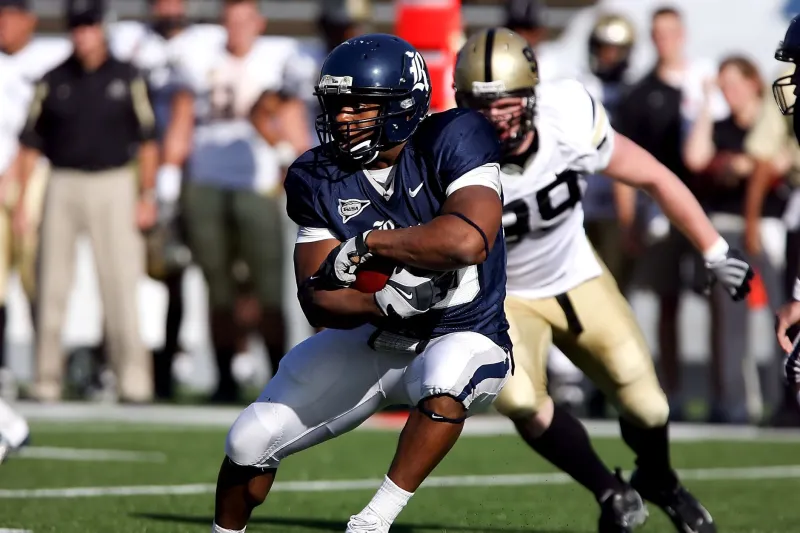
Here's a scenario that plays out in almost every NFL game: a running back takes a handoff on second-and-six, hits a crease, and falls forward for four yards. The crowd barely reacts. The announcers mention it in passing. The offense lines up for third-and-two and converts.
But zoom out. That four-yard run didn't just move the chains — it told the defense something. The linebackers bit inside. The safety crept up a half-step. The offensive coordinator filed that away and called a play-action shot three drives later that went for 38 yards because the safety was still thinking about that earlier run.
This is how good offenses actually work. Not play-by-play, but drive-by-drive, quarter-by-quarter. Setting traps that don't spring until you've completely forgotten about the bait.
Pre-Snap Communication Is a Whole Other Game
Most fans are watching the ball when the quarterback is at the line of scrimmage. Coaches and analysts are watching everyone else.
The center and quarterback are having a conversation before every single snap. They're identifying the Mike linebacker — the imaginary pivot point around which the entire protection scheme is built. Get that call wrong once and your quarterback eats a free rusher. Get it wrong consistently and you're watching a backup QB by halftime.
What makes this so hard to appreciate from the stands or the couch is that the good version of this process is invisible. When the line picks up a stunt perfectly and the quarterback throws a clean 15-yard out route, nobody says "great Mike call." They say "nice throw." The architecture behind that throw goes completely uncredited.
Conversely, when the protection breaks down and the quarterback gets hit, everyone blames the offensive line as a unit. But nine times out of ten, there was a specific miscommunication on a specific call that caused the whole thing to unravel.
Defensive Disguises and Why They Matter More Than the Blitz
Everybody loves talking about the blitz. Coaches get credited for being aggressive. Analysts draw up diagrams of overload packages and exotic looks. But here's the thing — the blitz only works because of everything that happens before the snap to make the quarterback think it's NOT coming.
The real chess match on defense isn't the blitz itself. It's the disguise. A safety who can credibly look like he's playing Cover 2 while actually rotating into a Cover 1 hole shot is worth his weight in gold. A linebacker who can walk up to the line, sell a blitz, and then drop into a zone at the snap disrupts the quarterback's pre-snap read entirely.
When a quarterback throws an interception on a "bad read," there's usually a defensive back who spent the entire pre-snap period lying to him. That's the play that doesn't show up in the box score but absolutely shows up in the film room on Monday morning.
Third Down Is a Game Within the Game
If you want to understand why a team won or lost, start with third down conversion rates and work backward. Not the obvious third-and-long failures — those are expected. Look at the third-and-short situations. The third-and-ones and third-and-twos that teams inexplicably fail to convert.
A missed conversion on third-and-one in the second quarter feels meaningless. Punt, defense holds, drive continues on the other side. No big deal. Except you just gave the other team's offense a possession. And if that possession results in a field goal, you're now chasing. And if you're chasing, your play-calling becomes more predictable. And if your play-calling becomes predictable, you're already losing the game — you just don't know it yet.
The butterfly effect in football is real, and it almost always traces back to a third down situation that felt inconsequential at the time.
The Adjustment Window
Halftime adjustments get talked about constantly, but there's a smaller, less discussed adjustment window that matters just as much: the two-minute warning in the first half.
Coaches who are really dialed in use those two minutes not just to stop the clock but to pull their coordinators aside and identify the one or two things the other team is doing that they didn't expect. A defensive coordinator who notices the opposing offense is overloading the boundary on first down has a chance to fix his rotation before it costs him a touchdown.
Most of the time, fans see the two-minute warning as a commercial break. Inside the sideline, it's the most compressed film session of the game.
Why This Stuff Is Hard to See — And Why It's Worth Learning
None of this is easy to pick up if you're watching casually. It takes repetition, and honestly, it takes a willingness to watch the game with the ball out of frame sometimes. Watch the linebackers. Watch the corners at the snap. Watch the offensive line's footwork before the quarterback even sets up.
Once you start seeing it, you can't unsee it. And the games that used to feel like a collection of random plays start to look like exactly what they are: a series of decisions, adjustments, and hidden battles that play out long before anyone scores a point.
The touchdowns are the receipts. The real game is everything that came before them.