Chain Gang Roulette: The NFL's Dirtiest Secret Isn't the Rules — It's the Ruler
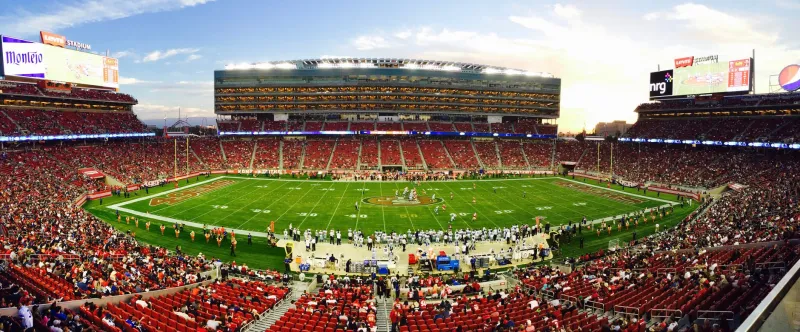
Let's talk about the moment every football fan has lived through at least once. Fourth and inches. The quarterback sneaks. The pile collapses. The officials peel bodies off the turf, spot the ball, and the chain gang jogs out in a ceremony that somehow still looks ceremonial after 100 years of professional football. The chains stretch. Everyone holds their breath.
And then — inches short. Or inches over. And nobody actually knows which.
This is the NFL's most consequential guess, and it's dressed up in enough pageantry that most fans don't even realize it's a guess.
The Spot Is Already Wrong Before the Chains Come Out
Here's the thing people miss: the chain measurement is only as accurate as the original spot. And the original spot? That's a referee eyeballing where a ball carrier's forward progress stopped — often at the bottom of a pile, often from 15 feet away, often with three defensive linemen in the way.
The process looks scientific. The chains are precise. The problem is they're measuring from a starting point that was itself an approximation. You're essentially using a laser level to check a wall that was built crooked.
Referees do their best. They're trained professionals. But asking a human being to pinpoint a football's exact position to within an inch, under stadium noise, in real time, while 300-pound linemen are collapsing around them — that's not officiating, that's guessing with authority.
And the NFL has been completely fine with that for decades.
Playoff Games That Turned on a Coin Flip
The examples aren't hard to find. They're almost everywhere once you start looking.
Go back to the 2015 NFC Championship. The Seattle Seahawks' final drive against the Green Bay Packers included a critical fourth-down conversion that the officiating crew spotted generously enough to keep the drive alive. Seattle eventually won and went to the Super Bowl. Nobody could definitively prove the spot was wrong. Nobody could definitively prove it was right, either. That's the whole problem.
Or look at any number of late-game quarterback sneaks in recent playoff history where the ball was spotted short of the first-down marker by what appeared to be less than half a football. The chain comes out, the measurement happens, and either the drive continues or it dies. The actual truth of the matter — whether the nose of the football actually broke the plane of that yard line — is unknowable with the current system.
These aren't edge cases. They happen multiple times every single season, and in close games, they're often the difference between a team going home and a team advancing.
The League Has the Technology. It Just Doesn't Want to Use It
This is where the story gets genuinely strange.
The NFL has invested heavily in player tracking technology. Every player on every field wears chips. The ball has been chipped in various experimental forms. The league uses the Next Gen Stats system to track receiver routes, quarterback release points, and running back burst speed with sub-inch precision.
They know exactly where players are on the field in real time.
And yet, when it matters most — when a team needs one yard to keep a drive alive in the fourth quarter of a playoff game — the league rolls out a chain that was last updated technologically sometime around the Eisenhower administration.
The charitable explanation is that the chip-in-ball technology hasn't been refined enough for this specific use case. Fair enough. But the league hasn't exactly been sprinting toward a solution. There's been no public timeline, no urgency, no acknowledgment that this is even a problem worth prioritizing.
The less charitable explanation is that the NFL has made a calculated decision that some officiating ambiguity is actually good for business. Controversy generates engagement. Close calls generate debate. And as long as no single bad spot becomes a defining scandal — the kind that forces Congressional hearings or triggers mass fan revolt — the league has very little incentive to eliminate the uncertainty.
Why Replay Doesn't Save You Here
You might be thinking: can't replay just fix this? The short answer is no, and the reason is almost poetic in its frustration.
Replay officials can review whether a ball carrier was down by contact. They can review fumbles, touchdowns, and out-of-bounds calls. What they cannot do — what the current replay system structurally cannot do — is definitively determine the exact spot of the ball when forward progress is stopped.
To overturn a spot via replay, the evidence has to be indisputable. Given that the cameras are positioned to capture the overall play rather than provide a bird's-eye millimeter-level view of a football's nose relative to a yard line, indisputable evidence almost never exists. The replay system, for all its expansion over the years, is essentially powerless over the very call that matters most.
So the chain gang walks out, the crowd roars, and everyone pretends the measurement means something definitive when really it's just confirming an educated guess with a piece of metal equipment.
What a Fix Would Actually Look Like
The technology exists to do this right. A ball with an embedded sensor tied to the existing player-tracking infrastructure could theoretically give officials a precise location reading in real time. Overhead cameras used in combination with line-of-scrimmage markers could provide replay officials with a usable frame of reference.
Some college conferences have experimented with variations of this. The NFL has the resources to make it happen at scale if it wanted to.
The fix doesn't have to be perfect to be better. Even a system that gets it right 95 percent of the time instead of 80 percent of the time represents a massive improvement in competitive fairness. Especially in January, when every inch genuinely counts.
The Integrity Problem Nobody's Talking About
The NFL spends enormous energy on officiating optics. They fine players for taunting. They suspend coaches for trying to trip opponents on the sideline. They review pass interference calls and targeting hits and whether a receiver had two feet in bounds.
All of that is downstream of the most basic question in football: where is the ball?
If the league can't answer that question with confidence, everything built on top of it — every down-and-distance call, every first down, every fourth-and-one decision — is built on a foundation of organized guesswork.
That's not a knock on the officials. They're doing the best they can with a system that hasn't evolved. It's a knock on a league that prides itself on precision and innovation but still sends a guy with a chain to determine the most important spot on the field.
At some point, the chain gang stops being tradition and starts being a liability. The NFL isn't there yet. But with every playoff game decided by an inch nobody can actually verify, they're getting closer.