Charge It to the Game: How NBA Offenses Turned the Flail Into a Weapon and Left Refs Holding the Bag
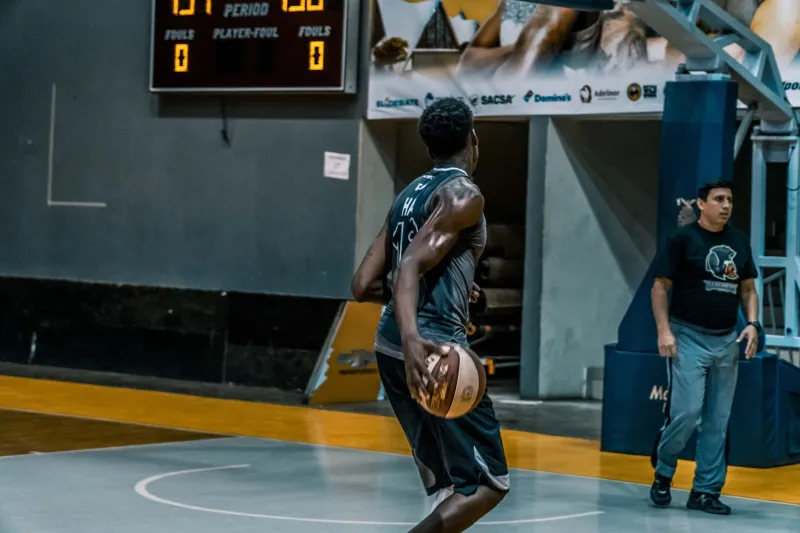
There's a play you've seen a thousand times this season. A ball-handler drives the lane, absorbs contact — contact they initiated — throws their head back like they just caught an elbow from a heavyweight, and the whistle blows. Defensive foul. Two shots. The crowd groans, or cheers, depending on which jersey they're wearing. And somewhere in the building, a defender who barely moved his feet is standing there with his hands up, genuinely confused about what he did wrong.
That play has become one of the most quietly destructive forces in the NBA right now. And it's not getting nearly enough attention.
What We're Actually Talking About
Let's be clear about what this is — and what it isn't. This isn't the same conversation as flopping, though they're cousins. Flopping is about selling minimal contact as catastrophic. What we're talking about here is something a step more sophisticated: offensive players deliberately engineering contact and then performing victimhood so convincingly that refs flip the call entirely.
The mechanism works like this. An offensive player with the ball — usually a guard or a wing — drives into a defender who has decent position. Instead of going straight to the basket, the offensive player contorts mid-air, extends into the defender's body, or dips a shoulder to create the collision. Then comes the flail. Arms out, head snapping back, sometimes a full-body spin that looks violent but is almost entirely self-generated. The ref sees chaos and whistles the guy who was standing there.
What should sometimes be an offensive foul — or at minimum, a no-call — becomes a trip to the free-throw line. And it's happening constantly.
The Stars Who've Mastered It
You don't have to name names to recognize the archetype, but let's be honest — this skill is concentrated at the top of the league. The best offensive players in the NBA have essentially developed a secondary skill tree around contact manipulation. Some of the most celebrated scorers in the game are also the most sophisticated contact engineers on the planet.
Watch a player like Trae Young work in the mid-range. He's not just looking for a shot — he's looking for a defender's hand. He'll pump fake, wait for the reach, then elevate into that reach on purpose, kicking his legs out to maximize the contact zone. The defender, who was already beaten and reaching out of desperation, gets called. James Harden built an entire era of his career — a Hall of Fame era, let's be clear — around exploiting exactly this mechanic. Step-back threes where he'd lean into a late-closing defender. Drive-and-kicks to the groin area that somehow produced shooting fouls. The man turned the rulebook into a personal ATM.
Kyrie Irving has a version of it. Luka Dončić has refined it into something almost artistic. These are great players doing great-player things. But the move itself has gotten out of hand.
Why Refs Keep Falling For It
Here's the uncomfortable part: referees aren't stupid. They're some of the most trained officiating professionals in American sports. So why does this keep working?
The answer is partly about optics and partly about incentive structures. When an offensive player flails dramatically, the visual information refs receive is: something violent just happened. The human brain — even a trained one — processes theatrical contact as real contact. The flail creates a story, and refs are reading that story in real time at full speed.
Beyond that, there's an invisible pressure around star players. Nobody is saying refs are consciously protecting superstars, but the data on foul calls correlates uncomfortably well with offensive reputation. Players who've established themselves as contact-drawers get the benefit of the doubt more often. The rep precedes the play.
And then there's the pace problem. The game is faster than it's ever been. Refs are processing more information per second than they were in the hand-check era. When a play is ambiguous — which contact-engineering plays almost always are — the default tends to go to the offensive player, because the defensive alternative (a blocked path, a collision) looks worse on replay.
The Defenders Who Are Getting Buried
The real victims here are the guys playing straight-up defense. There's a generation of NBA defenders who've essentially learned that playing textbook defense — staying vertical, keeping their hands up, holding their position — is no longer a guaranteed shield against foul trouble. Because if the offensive player is skilled enough, they can create the contact themselves and make it look like your fault.
Big men are especially exposed. A center who sets his feet and takes the hit on a drive can get called for a blocking foul because the offensive player's flail was convincing enough. Guards trying to stay in front of shifty ball-handlers get dinged for fouls on plays where they barely grazed a jersey. Foul trouble changes rotations, kills defensive schemes, and can swing a game entirely — and it's increasingly being manufactured by the offense rather than earned by the defense.
What the League Should Actually Do
The NBA has rules on the books for this. Reckless offensive contact is supposed to be an offensive foul. Initiating contact is supposed to be penalized. The problem isn't the rulebook — it's the enforcement gap between what the rules say and what refs call in real time.
A few things could help. Enhanced replay review specifically for charge-versus-block calls in the final two minutes already exists — expand it. More importantly, the league should use its two-minute report data to start flagging patterns of contact engineering the same way it flags flops. Right now, flop warnings are handed out occasionally and treated like a minor embarrassment. There's no equivalent accountability system for offensive contact initiation.
The challenge is cultural. This has become so embedded in how elite offensive players operate that any crackdown would feel like a sea change. Stars would complain. Foul rates would drop. Free throw attempts would crater. And every pundit in the country would write about how the refs are suddenly calling the game differently.
But that's exactly the point. They should be.
The Bottom Line
The NBA has a contact problem, and it's not coming from the defense. The most skilled offensive players in the world have figured out how to turn the rulebook into a weapon — not just by being good, but by being theatrical. They've made the foul call part of their offensive arsenal, and refs have become unwitting participants in the act.
This isn't about taking anything away from elite scorers. The footwork is real. The skill is real. But when the flail becomes more valuable than the shot, something's off. When defenders are getting punished for standing their ground, something's broken. And when the most dangerous move in basketball is sometimes a dramatic arm extension followed by an Oscar-worthy stumble, the game deserves a harder look at who's actually fouling whom.