Flag on the Feeling: How the NFL Turned Celebrating Into a Gamble Nobody Can Win
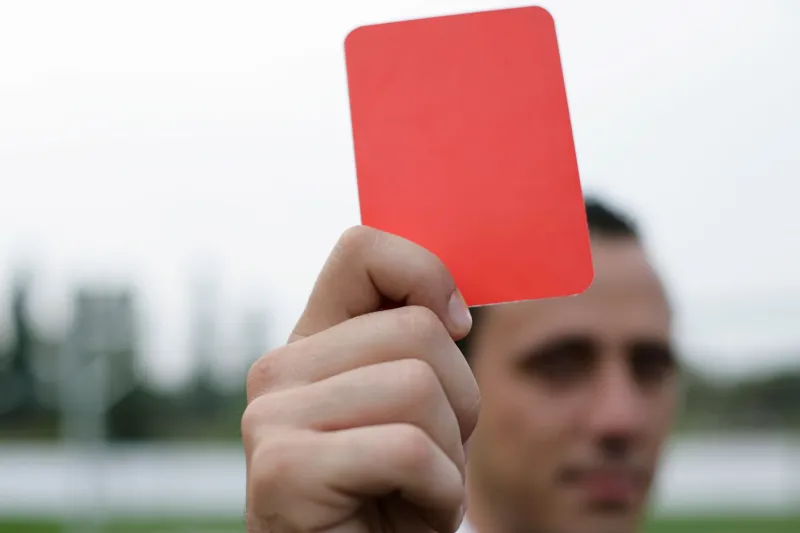
Somewhere between the Lambeau Leap and the death of the end zone dance, the NFL decided that joy was a liability. And somewhere between that decision and right now, the league created a penalty so subjective, so inconsistently applied, and so nakedly influenced by game situation and star power that it's become less of a rule and more of a mood.
Welcome to taunting in the modern NFL — where a guy can spike the ball after a first down and get away clean, while someone else flexes at a cornerback from twelve yards away and costs his team fifteen yards and potentially the game. Same energy. Different flag. No explanation.
The Rule Itself Is the Problem
Here's the thing about the NFL's unsportsmanlike conduct and taunting language: it's vague by design. The rulebook says players can't use "baiting or taunting acts or words that may engender ill will between teams." That's not a rule. That's a vibe check. It's the kind of language that gives officials enormous discretion and essentially zero accountability.
And when you give NFL referees enormous discretion and zero accountability, you get exactly what you'd expect — chaos dressed up as officiating.
The league tightened its taunting enforcement heading into the 2021 season, promising a crackdown after years of what it described as escalating behavior. What actually happened was a wave of flags that made fans furious, players confused, and commentators scrambling to explain calls that had no rational explanation. A guy got flagged for pointing at an opponent after a big hit. Another got flagged for what appeared to be yelling into the air after a sack. The standard wasn't clearer. It was just louder.
Star Power and the Sliding Scale of Outrage
If you've watched enough NFL football, you already know the unspoken truth that nobody in the league office wants to say out loud: not all celebrations are treated equally, and not all players are held to the same standard.
When a marquee quarterback jaw-jacks at a linebacker after a scramble, cameras cut away and announcers call it "competitive fire." When a young corner talks trash after breaking up a pass in a meaningless third quarter, there's a flag in the air before the ball hits the turf. The difference isn't the act. It's the jersey. It's the Nielsen rating. It's the implicit understanding that certain players drive eyeballs and certain players don't.
This isn't just cynical fan speculation. It's a pattern that's been documented repeatedly by coaches, players, and analysts who track penalty data across seasons. Teams with younger rosters and less established stars tend to draw more taunting flags. Teams with household names tend to get the benefit of the doubt. That's not officiating. That's favoritism with a whistle.
The Momentum-Kill Nobody Talks About
Here's where it gets genuinely damaging to the product: taunting penalties almost always come immediately after big plays. A defensive end sacks the quarterback and screams — flag. A receiver makes a ridiculous contested catch and flexes toward the sideline — flag. A linebacker delivers a clean, punishing hit and stands over the ball carrier for half a second too long — flag.
So the sequence becomes: great play, flag, fifteen yards, automatic first down, momentum gone, crowd deflated. The penalty doesn't just punish the player. It punishes the team, the game, and the fans who just got on their feet for the first time all quarter. The NFL has essentially created a mechanism to undo its own highlight reel in real time.
And because the enforcement is inconsistent, players can't even adjust. There's no reliable internal calibration. You can't watch film and figure out where the line is, because the line moves depending on the referee crew, the quarter, the score, and factors nobody will ever officially acknowledge.
What the League Actually Wants vs. What It's Getting
The NFL has always had a complicated relationship with personality. The league wants marketable stars. It wants viral moments. It wants SportsCenter clips and social media engagement and the kind of electric atmosphere that makes casual fans tune in. But it also has a deeply embedded institutional conservatism — a fear that too much individualism, too much emotion, too much humanness on the field will somehow undermine the product.
The taunting rule is where those two impulses collide and create a mess. The league wants the personality, but it wants to control it. It wants the celebration, but only the pre-approved kind. It wants the emotion, but filtered through a rulebook written by people who've never had to explain to a twenty-four-year-old why he can't pump his fist after the best play of his career.
The result is a generation of players who've learned to suppress their instincts mid-celebration, calculating risk in real time while their adrenaline is still spiking. That's not good for the game. That's not good for the players. And it's definitely not what anyone means when they talk about wanting authentic football.
Fix It or Own It
There are really only two honest paths forward. The first is genuine clarity — the NFL publishes specific, observable criteria for what constitutes taunting, trains officials to apply it consistently, and creates a public accountability mechanism when flags are thrown incorrectly. That means releasing explanations after games, not just during the following week's officiating report that nobody reads.
The second path is to loosen the standard significantly and let players be players. The NFL already walked back some of its stiffer celebration rules years ago, and the game didn't collapse. Touchdown dances came back. The world kept spinning. If the league can survive choreographed group celebrations in the end zone, it can survive a cornerback staring down a receiver after a pick.
What the league can't keep doing — or at least can't keep doing without serious credibility damage — is pretending that its current approach is principled enforcement. It isn't. It's selective, it's inconsistent, and it's increasingly obvious that the flag depends less on what happened and more on who's watching, who's throwing, and how much the moment matters.
The taunting penalty was supposed to protect the integrity of competition. Right now, it's one of the biggest threats to it.