The NBA's Forgotten Rule: How Defensive Three Seconds Became a Regular Season Myth
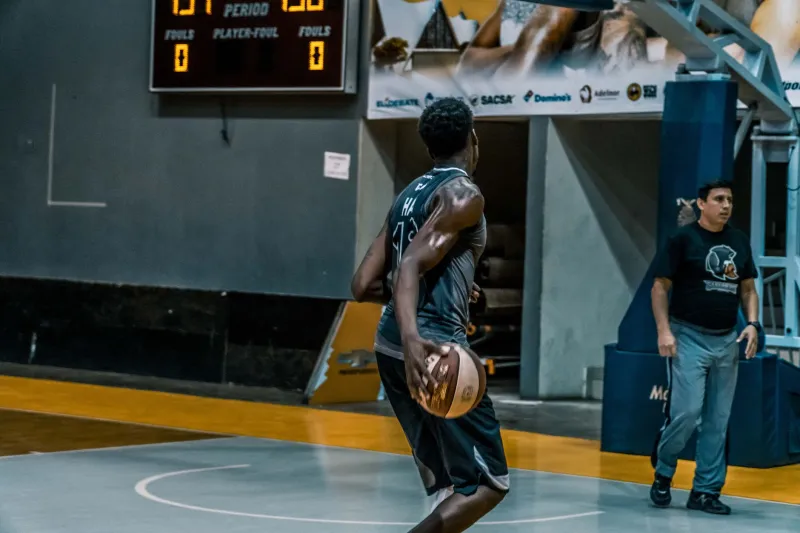
There's a rule in the NBA that says a defender cannot hang out in the paint for more than three seconds unless he's actively guarding someone near him. It's called the defensive three-second violation, and it has been on the books since 2001. You'd never know it watching a Tuesday night game in January.
This isn't a niche officiating gripe. It's a structural problem that quietly reshapes how teams play defense, who wins games, and ultimately, whether the league's credibility holds up when the lights get brighter in May and June.
The Rule, For Those Who've Forgotten It Exists
The defensive three-second rule was introduced to open up the lane and discourage teams from stationing a massive rim protector in the paint as a permanent deterrent. The idea was sound: force defenders to either actively guard someone or clear out, which in theory creates more driving lanes and more dynamic offense.
In practice, the rule gets called at roughly the same frequency as a delay-of-game warning at a pickup game in a local rec center. Watch any stretch of regular season basketball and you'll see big men camping in the lane — arms out, feet planted, not within five feet of their assigned man — for stretches that would make a referee blush if they were paying attention. Most of the time, they're not.
According to data tracked by officiating analysts across multiple recent seasons, defensive three-second violations are called at a rate of less than one per game, league-wide. That number should feel alarming, because the actual violation is happening several times per possession on certain defensive schemes.
Why It Gets Ignored — And Who Benefits
Here's the uncomfortable truth: selective non-enforcement of this rule is a massive competitive advantage for defensive-minded teams. When you can park a 7-footer in the paint without consequence, you are essentially running an illegal defense that the rulebook explicitly prohibits.
Think about what that looks like in practice. A point guard drives baseline. The help defender doesn't have to rotate from the weak side because there's already a big man standing between the basket and everyone else. That big man isn't technically guarding anyone, but nobody blows a whistle. The drive gets snuffed. The offense resets. The advantage disappears.
Now flip it to the playoffs. Officiating crews tighten up. Games slow down. Referees who spent four months looking the other way suddenly start calling it — inconsistently, at the worst possible moments — and coaches are left furious because their entire regular season defensive identity was built on something that was never actually legal to begin with.
That's not a small problem. That's a credibility issue.
The Playoff Whiplash Is Real
Ask any defensive coordinator worth their whiteboard about the shift in officiating standards between the regular season and the playoffs and you'll get a knowing laugh. The game changes. Not just in intensity — in the actual rules being applied.
We saw this play out in recent playoff runs where teams that dominated defensively during the regular season suddenly looked disorganized and foul-prone the moment officials started calling the paint more closely. When your defensive scheme is partially built on a violation that went uncalled for six months, having it suddenly enforced in a Game 5 isn't just frustrating. It's a legitimate competitive disadvantage.
And the teams that suffer most aren't always the ones you'd expect. It's often the scrappy, defense-first squads without the offensive firepower to compensate. The ones who leaned hardest into what officials were allowing, only to find the rulebook waiting for them in the second round.
The Officials Aren't Entirely to Blame
Let's be fair here. NBA officiating is an extraordinarily difficult job. The pace of the game, the athleticism of the players, and the sheer volume of judgment calls per game make it genuinely hard to catch everything. Defensive three seconds requires a referee to be tracking a specific player's feet relative to the lane markings while simultaneously watching the ball, monitoring contact, and managing 10 athletes moving at full speed.
But that's also exactly why the league needs to address this at a systemic level rather than leaving it to in-game discretion. If the rule is too difficult to enforce consistently, either enforce it anyway with proper officiating emphasis — which the league can mandate through its officiating standards program — or acknowledge that it's unenforceable and modify it.
What you can't do is let it drift into irrelevance for 82 games and then suddenly treat it like scripture once the bracket is set.
What a Fix Actually Looks Like
There are a few directions the league could go here. The most straightforward is an officiating emphasis mandate — the same mechanism the NBA uses to crack down on flopping, or to emphasize freedom-of-movement calls. Basically, the league tells its officials: this is a priority, call it more, and your performance reviews will reflect whether you're catching it.
A second option is a technology assist. The league already uses replay review for a growing list of situations. A dedicated shot-clock-style display showing how long a defender has been in the lane isn't technically impossible, and it would at least create transparency. Coaches could challenge. Fans would see it. Accountability would follow.
The third path — and probably the most honest one — is a genuine rule review. If the defensive three-second rule as written is too broad to enforce fairly, rewrite it. Define "actively guarding" more precisely. Create clearer thresholds. Give officials something concrete to work with rather than a vague standard that invites inconsistency.
The Bigger Picture
Sports rules only mean something if they're enforced with something resembling consistency. The NBA has done tremendous work in recent years improving officiating transparency, releasing last-two-minute reports, and engaging with critics who point out specific missed calls. That's genuinely commendable.
But the defensive three-second rule is a slow leak in a tire. It doesn't blow out all at once. It just quietly undermines the integrity of how defense is played, rewards teams willing to skirt the rules, and then explodes into controversy at the worst possible moment — a playoff series where everything is on the line and the rulebook suddenly shows up uninvited.
Call the rule. All season. Or change it. But this weird middle ground where it technically exists but practically doesn't? That's not good officiating. That's just hoping nobody notices.
So far, most people haven't. But the playoffs have a way of making everyone pay attention.