Let Them Play? How the NFL's Late-Game Whistle Silence Is Quietly Rigging Outcomes
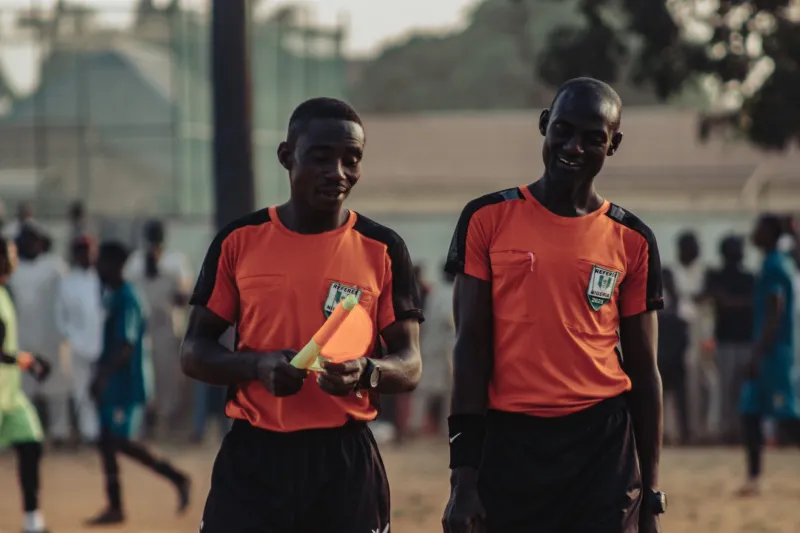
Every NFL fan knows the feeling. Fourth quarter, two-minute warning, your team trailing by four. The receiver runs a crossing route, gets absolutely mugged at the line, and the ref standing six feet away somehow finds his flag pocket completely inaccessible. The announcer mutters something about refs "letting them play in big moments." The color commentator nods solemnly, as if this is wisdom rather than absurdity.
Here's the thing nobody wants to say out loud: that's not officiating. That's improvisation. And it's costing teams games they deserved to win.
The Unwritten Rule That Overrules the Actual Rules
The NFL rulebook doesn't have a clause that says defensive holding stops mattering inside the two-minute warning. Pass interference doesn't come with an asterisk that reads "except in playoff situations where the narrative demands a clean finish." And yet, the data and the eye test both tell the same story — penalty flags disappear in high-leverage moments at a rate that can't possibly be coincidental.
A 2023 analysis of NFL playoff games found that penalty rates in the final two minutes of close games dropped significantly compared to the first three quarters of the same matchups. We're not talking about a minor dip. We're talking about a statistical cliff. The game gets tighter, the moment gets bigger, and somehow the rulebook gets shorter.
The pressure refs feel to "let the players decide it" is real, documented, and completely at odds with the concept of consistent officiating. Former officials have admitted as much in retirement. There's an institutional culture inside NFL officiating that treats late-game flag-throwing as a kind of sin — an intrusion on the drama. Which sounds noble until you realize it means the rules of the game are being selectively enforced based on vibes.
Playoff Ghosts: The Non-Calls That Changed Everything
You don't have to dig very deep into recent postseason history to find examples that still make fans' blood boil.
The 2018 NFC Championship Game remains the most notorious. Nickell Robey-Coleman's helmet-to-helmet hit on Tommylee Lewis with 1:49 remaining — a play that was simultaneously pass interference, illegal contact, and a targeting foul — drew no flag. The Saints lost in overtime. The Rams went to the Super Bowl. The non-call was so egregious that Louisiana filed a lawsuit, the NFL changed its replay rules, and Roger Goodell sat through a press conference that felt less like a media availability and more like a congressional hearing.
But that's the famous one. The one that made the highlight reels and the legal briefs. What about the hundreds of quieter non-calls — the defensive holding that wasn't called on a would-be game-winning drive, the offensive pass interference that got swallowed because nobody wants to see a Super Bowl decided by a flag? These are the plays that reshape franchises without ever generating a SportsCenter segment.
Defense Has Figured It Out — And Offenses Are Furious
Here's where it gets genuinely interesting from a strategic standpoint: defenses know. Defensive coordinators know. The players absolutely know.
If you're a cornerback and you've watched enough film to understand that refs are going to pocket their flags in the fourth quarter of a tight game, what's the rational response? You play more physically late in games. You hold a little more at the line. You take the calculated risk that the officiating culture will protect you when the moment is biggest. It's not cheating — it's adaptation. It's understanding the real rules rather than the written ones.
The result is a bizarre arms race where defenses are effectively playing by a different rulebook in the final minutes than they were in the first half. Offensive coordinators have started scripting plays specifically to exploit early-game officiating strictness before the refs go into "let it go" mode. Teams are literally game-planning around anticipated referee psychology rather than the actual regulations.
That's not a footnote. That's a fundamental distortion of the sport.
The "Flow of the Game" Myth
The justification you'll hear from analysts, former players, and the occasional brave official is that swallowing the whistle "preserves the flow of the game" and ensures the outcome is decided by players rather than penalty flags.
This argument sounds reasonable for about four seconds before it completely falls apart.
First, if a defender commits pass interference, calling that penalty IS letting the players decide — because the offensive player was prevented from making a play by an illegal act. The flag isn't an intrusion on the game. The foul was the intrusion. The flag is the correction.
Second, "flow of the game" is selectively applied in ways that reveal its true purpose: protecting the viewing experience at the expense of competitive integrity. Refs don't swallow the whistle on a delay of game call because it preserves flow. They don't let offensive linemen hold without consequence in the first quarter because they want the game to breathe. The "flow" argument only materializes when the moment is big enough that a flag would feel dramatic. Which means it's not a philosophical principle — it's a PR strategy.
Third, and most importantly: inconsistency is worse than any individual bad call. Players, coaches, and fans can adjust to strict officiating or lenient officiating. What nobody can adjust to is officiating that changes its own standards based on game clock and score differential.
What Fixing This Actually Looks Like
The NFL has shown it can change officiating standards when it wants to. The roughing-the-passer crackdown a few years back was so aggressive it became its own controversy. The league clearly has the infrastructure to mandate flag-throwing behavior. The question is whether there's institutional will to address a problem that the broadcast partners, the casual fan base, and the league's own PR apparatus would all prefer to ignore.
A reasonable starting point: establish clear internal metrics for penalty rate consistency across game situations. If a referee crew's flag rate in the final two minutes of close games is statistically different from their flag rate in the first half, that's a performance issue — not a feature. Grade officials on consistency, not just accuracy.
The league could also expand replay review to cover a defined set of non-calls — not every judgment play, but egregious interference and contact fouls in the final minutes. Yes, it slows the game down. But the current alternative is a system where the rules of football quietly stop applying when the football matters most.
The Ref in the Room
Nobody roots for the officials. Nobody buys a jersey with a ref's number on the back. But the entire premise of competitive sports — the reason any of this matters — is that the rules apply to everyone, in every situation, regardless of what the scoreboard says or what the narrative demands.
When referees swallow their whistles in crunch time, they're not stepping back and letting the game breathe. They're making a call. They're deciding that the defender who grabbed a receiver's jersey didn't commit a foul, not because he didn't, but because the moment felt too big for a flag. That's not neutrality. That's a choice — and it's a choice with winners and losers.
The NFL sells itself on the idea that any given Sunday, anything can happen. But if the officiating culture quietly tilts the field toward whoever plays dirtier when the refs go quiet, then what's actually happening on any given Sunday is a lot more complicated than the league wants to admit.