Steps Ahead of the Rules: How NBA Stars Learned to Travel Without Consequence
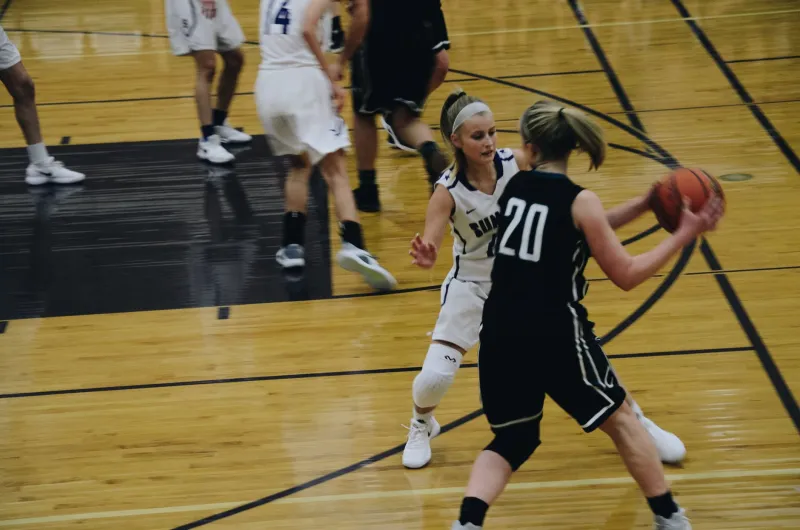
There's a moment that happens a few times every NBA broadcast that goes something like this: a superstar catches the ball on the wing, takes what appears to be three full steps before elevating, finishes with a reverse layup that defies both gravity and the rulebook, and the crowd goes absolutely insane. The announcers lose their minds. The highlight goes viral by midnight.
Nobody calls a travel.
Nobody even mentions a travel.
And if you grew up watching basketball in literally any previous era, your brain is quietly short-circuiting.
The Rule Hasn't Changed. The Enforcement Has.
Let's be clear about something upfront: the NBA's traveling rule, at its core, hasn't been rewritten into oblivion. You still can't take more than two steps after gathering the ball without dribbling. The gather step — that moment when a player collects the ball before beginning their move — has been officially codified since 2009, which gave players a little more room than the old-school interpretation allowed. Fine. That's a legitimate rule adjustment.
But what we're seeing on the floor right now goes well beyond any gather step clarification. We're watching players take what amounts to a full running start, plant both feet with the grace of someone parallel parking a truck, and then launch into a shot or layup that involves enough steps to qualify as a short commute. And referees — experienced, professional officials who know this game cold — are swallowing their whistles like it's a competitive sport.
The question everyone's dancing around is simple: why?
Star Power Has Always Had a Gravitational Pull
Here's the uncomfortable truth that nobody in league offices is going to put in a press release: NBA officiating has always had a tier system. Stars get calls that role players don't. That's not a conspiracy theory — it's practically an open acknowledgment at this point, backed up by years of foul rate data and anyone who's watched more than a handful of games.
But traveling used to be different. It was one of those violations that cut across the star hierarchy. Even in the Jordan era, even with Magic, even with Shaq — guys got called for travels. Not every single time, sure, but enough that it functioned as an actual deterrent.
Somewhere along the way, that changed. The NBA's push toward entertainment, toward pace, toward the kind of jaw-dropping individual plays that generate clips and keep casual fans engaged, created an unspoken pressure on officials. Stopping the game to call a travel on LeBron James mid-drive is not just a whistle — it's a momentum kill, a potential controversy, and a highlight that never gets made. The calculus for refs shifted, even if the rulebook didn't.
The 'Gather Step' Loophole That Ate the Rulebook
The 2009 gather step clarification was supposed to clean things up. Instead, it handed creative players and their skill coaches a blueprint for finding every inch of gray area available.
Here's the problem: determining exactly when a player has "gathered" the ball is genuinely subjective. Is it when both hands are on the ball? When the dribble stops? When the player's momentum shifts? That ambiguity has been weaponized. Players now initiate their footwork before the gather is complete, effectively buying themselves an extra step that technically exists in a legal gray zone but functionally looks like a travel to anyone watching.
Coaches are teaching it. Skill trainers are building entire workout regimens around it. And because the league never drew a firm line in the sand about where the gather ends and the travel begins, referees are left making judgment calls in real time on plays that happen in under a second. Most of the time, they just... don't call it.
The Comparison Problem
Watch old footage of guards driving to the basket in the 1990s and compare it to what you see in a modern game. The footwork patterns are genuinely different — not just in style, but in the number of steps taken between catching and releasing the ball. This isn't nostalgia talking. It's frame-by-frame observable.
And here's what makes it complicated: some of what looks like traveling in slow motion is actually legal under the current interpretation. The gather step, combined with two legal steps, can look like three steps at full speed. Slow-motion replay has made fans hypersensitive to footwork in ways that don't always reflect what's actually illegal.
But not all of it is explainable away. There are plays — and you've seen them, you know the ones — where a superstar takes an extra step that isn't a gather step, isn't a pivot, isn't anything except an uncalled violation. And the ref is standing right there. And nothing happens.
What the League Is Actually Protecting
Let's not be naive about the business side of this. The NBA's superstar economy runs on individual brilliance. When Ja Morant helicopters to the rim or Luka Dončić engineers some impossible euro-step finish, that's the product. That's what gets people to tune in, buy jerseys, and share clips at work the next morning.
Calling a travel on those plays doesn't just stop a possession — it interrupts the narrative. And the NBA, more than any other American sports league, is deeply invested in its narratives.
That doesn't mean there's a memo going out to referees telling them to look the other way. It doesn't need to be that explicit. When a league's entire marketing infrastructure is built around celebrating a certain kind of play, officials internalize that context. The culture of enforcement shifts without anyone having to say a word.
So What's the Fix?
Honestly? There isn't a clean one.
Stricter enforcement would mean calling travels on plays that fans have been conditioned to celebrate, which would generate immediate backlash and accusations of over-officiating. Clearer rule language around the gather step would help, but it still leaves real-time judgment calls in the hands of humans working at game speed.
The most realistic path is probably the most boring one: the league needs to actually define the gather step with enough precision that referees have a consistent standard to apply, then enforce it evenly regardless of who's holding the ball. That means some highlights get wiped out. That means some stars get called for violations they've been getting away with for years. That means a transition period where everyone's frustrated.
But the alternative — continuing to let one of basketball's foundational rules function as optional for certain players — isn't officiating. It's theater.
And even the most casual fan eventually figures out when the show is rigged.