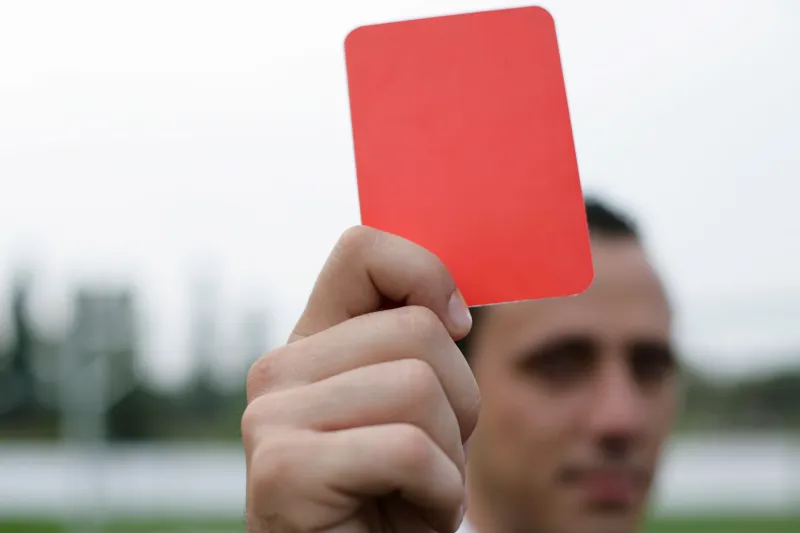
Somewhere between Odell Beckham Jr. pulling out an invisible dog leash and a linebacker pointing at a quarterback after a sack, the NFL drew a line. The problem? Nobody told the players — or the refs — exactly where that line is.
Taunting penalties have become one of the NFL's most maddening enforcement puzzles. The rule exists. The intent is clear enough in theory. But what actually gets flagged on any given Sunday feels less like consistent officiating and more like a personality test administered at 60 miles per hour. And when those flags land in the fourth quarter of a tight divisional game, they don't just sting — they shape outcomes.
What the Rule Actually Says (And Why That's Not Enough)
The NFL's rulebook defines taunting as using "baiting or taunting acts or words that may engender ill will between teams." That's it. That's the whole standard. A phrase so broad it could technically apply to a wide receiver winking at a cornerback.
In 2021, the league made a point of cracking down harder, and the spike in flags was immediate and jarring. Defenders got flagged for pointing at players they'd just tackled. Receivers got hit with penalties for turning toward a defender after a first-down conversion. At least one call that year came on a player who, by most accounts, was just running toward his own sideline with enthusiasm.
The league said it was cleaning up the game. Players and coaches said it felt like refs were suddenly policing body language. Both things were kind of true, which is exactly the problem.
The Celebration Gray Zone
Here's where it gets genuinely complicated. The NFL has spent years loosening its grip on touchdown celebrations — the so-called No Fun League reputation took a serious PR hit, and the league responded by allowing more choreography, more props (within reason), more group moments. That's all fine and good.
But taunting and celebrating aren't the same thing, and the space between them is where enforcement completely falls apart. A player can do a full choreographed end zone routine with three teammates and a football acting as a pillow — totally legal. But if that same player, on the way to the end zone, glances back at a defender and says something, suddenly it's 15 yards.
The NFL is essentially telling players: perform for the crowd, just don't perform at the opponent. The distinction sounds reasonable until you're a defensive end who just strip-sacked a quarterback and your natural instinct is to look at him while celebrating. That's not taunting in any real human sense. That's just how humans interact in competitive moments.
And yet, the flag flies.
Refs Are Improvising, and Everyone Knows It
Ask any veteran official — off the record, obviously — and they'll tell you that taunting calls involve a significant amount of in-the-moment judgment. Which is fine for some rules. Pass interference requires judgment. Holding requires judgment. But those calls are at least anchored to physical actions that can be reviewed and debated with some shared vocabulary.
Taunting is different. It's asking a referee to evaluate intent, tone, and social context in real time, from 30 yards away, in a stadium holding 70,000 people. Whether a gesture reads as celebratory or confrontational can genuinely depend on which direction the player is facing, who's nearby, and frankly, which referee happens to be closest.
The result is a system where the same action — say, flexing after a big hit — gets flagged in Week 4 and completely ignored in Week 11. Players notice. Coaches notice. And the inconsistency breeds exactly the kind of frustration the rule was supposedly designed to prevent.
The Competitive Cost
This would all be mildly annoying background noise if taunting flags were low-stakes. They're not. A 15-yard unsportsmanlike conduct penalty in the NFL is significant in any situation, but it becomes genuinely game-altering when it comes with an automatic first down, or when it flips field position in a one-score game late in the fourth.
In 2021, there were multiple instances where taunting flags in the final minutes directly impacted drives and, arguably, game results. A defense that just forced a punt suddenly has to defend from its own 15. A team that just converted a third down gets an extra 15 yards tacked on. These aren't abstract consequences. They're momentum-shifting, scoreboard-affecting decisions made by a referee who's deciding in a split second whether a player's expression crossed some invisible line.
That's a lot of power for a rule that can't even define its own boundaries clearly.
So What Would Actually Work?
The NFL has a few options here, none of them perfect. The most obvious fix is clearer, more specific language — actual defined behaviors rather than a vague "may engender ill will" standard. Point at a player? Flag. Stand over a player after a tackle? Flag. Everything else, play on. It's not elegant, but it's enforceable.
Another approach is tiered consequences. A warning system for first offenses, escalating to flags for repeated or egregious behavior, would at least give players some margin before the scoreboard gets involved. Right now, first-time and repeat offenders get the same 15-yard punishment, which makes the whole thing feel more punitive than corrective.
The league could also lean harder into post-game fines for the truly egregious stuff and pull back on in-game flags for borderline cases. Keep the real-time penalties for genuine confrontations — nose-to-nose jawing, crowd-baiting gestures — and handle the gray area financially after the fact. It doesn't solve everything, but it at least stops flags from deciding games over a guy who pumped his fist in the wrong direction.
The Real Issue Is Trust
At the core of this mess is a trust problem. Players don't trust that they know the rules because the rules keep shifting based on who's watching and what kind of mood the officiating crew is in. Coaches can't gameplan around penalties they can't predict. And fans — who genuinely enjoy the emotional theater of NFL football — keep watching game-changing flags land on plays that looked, to the naked eye, like normal competitive behavior.
The NFL wants the league to feel exciting and expressive. It also wants it to feel controlled and professional. Those two goals aren't incompatible, but right now, the taunting rule is doing a terrible job of balancing them. It's not protecting anyone. It's just adding chaos to a game that already has plenty.
Until the rulebook gets specific and officials get consistent guidance on what they're actually looking for, taunting calls will keep being what they are right now: a coin flip with a 15-yard consequence. And that's not enforcement. That's improvisation with a flag.