Flagged or Ignored: Pass Interference Is the NFL's Most Explosive Coin Flip
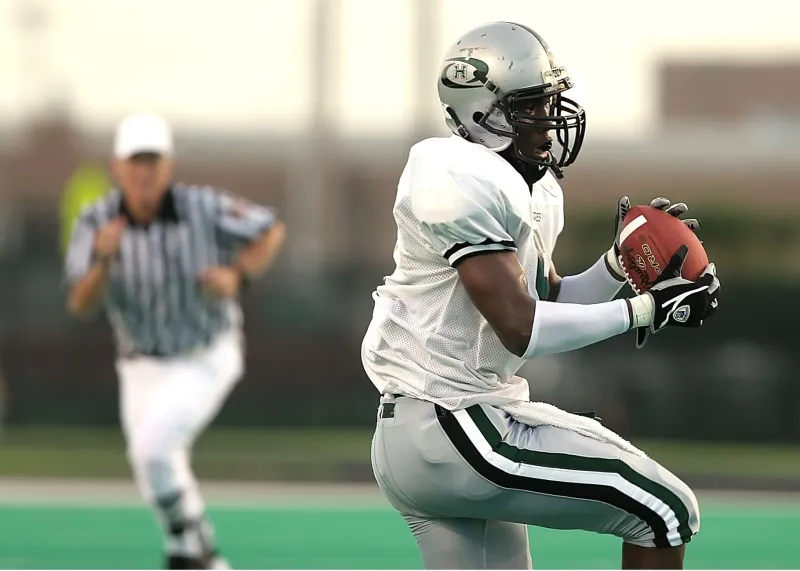
There is no call in professional football that carries more raw consequence per second of action than pass interference. A defensive back grabs a receiver's jersey forty yards downfield, and suddenly the offense is set up in field goal range on a free kick. No touchdown required. No drive needed. Just one flag and fifty yards of real estate handed over like a parking ticket.
And yet, despite all that weight, pass interference remains one of the most inconsistently enforced rules in the sport. The same contact that draws a flag in Week 4 gets swallowed whole in a January playoff game. The same arm extension that costs a cornerback fifteen yards in one stadium gets a casual wave-off in another. Refs aren't incompetent. The rule itself is the problem — and everyone from the coaches to the quarterbacks knows it.
What the Rulebook Actually Says (And Why It Doesn't Help)
The NFL defines pass interference as any act that "significantly hinders" an eligible receiver from making a catch. That word — significantly — is doing an enormous amount of work. It is, functionally, an invitation for interpretation. Because what significantly hinders a six-foot-two receiver in man coverage looks completely different from what significantly hinders a slot receiver running a crossing route through a zone.
The rule also carves out exceptions for contact that occurs while both players are "playing the ball," which sounds reasonable until you realize that determining intent in real time, at NFL speed, on a field surrounded by twenty other moving bodies, is nearly impossible. Officials aren't watching the ball and the players simultaneously. They're making educated guesses dressed up as official rulings.
The result is a standard that isn't really a standard at all. It's a vibe check with a penalty yardage attached.
The Same Play, Two Different Universes
Let's talk specifics, because the abstract version of this argument is easy to dismiss. In the 2018 NFC Championship Game, the entire football world watched a Rams defensive back level Saints receiver Tommylee Lewis before the ball arrived — a collision so obvious it became a referendum on the officiating process itself. No flag. Game over. Saints out. The fallout was so severe it literally changed the rulebook, forcing the NFL to temporarily allow coaches to challenge pass interference calls via replay.
That replay rule lasted exactly one season before the league scrapped it. Why? Because the reviews weren't overturning enough calls to justify the disruption. Translation: even with replay, officials couldn't agree on what pass interference looked like. The experiment didn't fail because the technology was bad. It failed because the definition was broken.
Flash forward to any random Sunday in the past three seasons and you'll find the inverse problem just as easily — flags thrown on clean coverage, corners getting burned by phantom calls on tightly contested routes where the receiver simply ran into the defender's positioning. Offensive pass interference, meanwhile, gets called so rarely it might as well be a myth. Receivers push off on contested balls constantly. It happens on almost every red zone fade route in existence. Flags? Scarce.
Coaches Have Cracked the Code
Here's where it gets genuinely strategic. NFL coaching staffs have spent years studying officiating tendencies, and the smart ones have turned pass interference ambiguity into a tactical weapon. Some quarterbacks are coached to target specific cornerbacks in press coverage not because they expect a completion, but because they expect a flag. Force the corner to play tight, throw a back-shoulder ball, and let the receiver sell the contact. It's not cheating. It's just working the system.
On the other side, defensive coordinators have started teaching their corners to get physical early in routes — before the ball is in the air — because early contact is less likely to draw a flag than contact at the catch point. The logic is backwards from what the rule intends, but it works. Disrupt the route illegally in a way that refs tend to let go, rather than contest the catch legally in a way that might get flagged anyway.
This is what happens when a rule becomes unenforceable. People stop trying to follow it and start trying to game it instead.
The Ref in the Middle of All This
It's worth taking a second to acknowledge how genuinely difficult this call is to make. NFL officials are positioned around the field with specific zones of responsibility. The back judge, field judge, and side judge are typically the ones watching downfield routes. They're tracking multiple receivers, reading the quarterback's eyes, monitoring defensive backs, and trying to determine — in under two seconds — whether contact was incidental, competitive, or illegal.
And they have to do it without the benefit of slow-motion replay in real time. The flag has to come out before the play is even over. By the time a broadcast booth analyst is watching the fourth angle of a contested call at quarter speed, the official has already made his decision and is walking off the yardage.
That's not a defense of bad calls. It's context. The rule asks officials to make a judgment that requires information they don't have access to. And then the league grades them on it.
Why the Penalty Yardage Makes Everything Worse
Most illegal contact penalties in football carry five or ten yards. Holding is ten yards and a loss of down. But defensive pass interference in the NFL is a spot foul — meaning the penalty is marked at the spot of the foul, no matter how far downfield it occurred. A fifty-yard interference call is fifty yards. Full stop.
No other major sport operates this way on a judgment call this subjective. A charging foul in basketball is two free throws regardless of where it happens. A tripping penalty in hockey is two minutes regardless of the situation. But in football, one official's interpretation of "significant hindrance" can relocate the football half the field in a single moment.
The disproportionate consequence amplifies every mistake. A missed call isn't just a missed call — it's potentially a touchdown denied or a drive extended by sixty yards. That's why the NFC Championship play still gets brought up five years later. The stakes attached to this particular judgment call are simply too high for the level of consistency the league is capable of delivering.
Fix It or Own It
The NFL has a few realistic options here, and none of them are perfect. They could move to a fixed yardage penalty — say, fifteen yards — which would reduce the catastrophic variance of a spot foul while still punishing the infraction. They could invest in better officiating training and consistency review processes. They could bring replay back with clearer standards and actual enforcement teeth.
Or they could keep doing what they're doing: letting the rule exist as written, accepting that enforcement will be inconsistent, and watching coaches and coordinators continue to manipulate the ambiguity for competitive advantage.
The NFL is a billion-dollar entertainment product. Controversy, to some degree, is part of the brand. But there's a difference between controversy born from great competition and controversy born from a rulebook that can't make up its mind. Pass interference is firmly in the second category — and until the league gets serious about fixing it, refs will keep getting blamed for a problem that was never theirs to solve.