Untouchable: How Roughing the Passer Became the NFL's Most Unenforceable Rule — and Defenses Are Paying for It
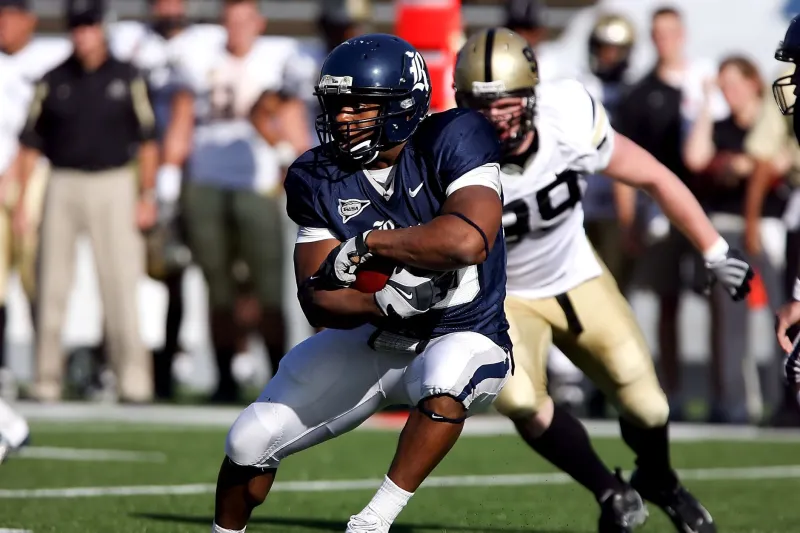
There's a moment every defensive coordinator knows. Their edge rusher — the guy making $20 million a year, the guy the whole scheme is built around — gets within arm's reach of the quarterback, and instead of finishing the play, he pulls up. Not because the QB got the ball out. Not because he read a stunt wrong. Because somewhere in the back of his brain, wired there by weeks of film sessions and sideline screaming, is the thought: If I hit him the wrong way, it's 15 yards and an automatic first down.
That's not football. That's a liability waiver with shoulder pads.
Roughing the passer has quietly become the NFL's most corrosive officiating problem — not because protecting quarterbacks is wrong, but because the standard for what constitutes a penalty has drifted so far from anything concrete that even the guys throwing the flags can't explain it consistently. And the people paying the steepest price aren't the quarterbacks. It's the pass rushers, the defensive coordinators, and frankly, the fans who showed up to watch actual football.
The Rule That Ate Itself
Let's start with what the rule is supposed to do. Roughing the passer exists to prevent defenders from delivering late, unnecessary, or helmet-to-helmet hits on quarterbacks after they've released the ball. Reasonable. Necessary. Nobody wants to watch Patrick Mahomes get launched into the turf a full second after the ball is gone.
But the NFL didn't stop there. Over the last decade and a half, the rule has been expanded, reinterpreted, and jury-rigged to the point where it now covers things like: landing on a quarterback with "full body weight," hitting a quarterback below the knee during a pass attempt, and — in the call that broke the football internet back in 2018 — simply wrapping up a quarterback and bringing him to the ground in a manner the official deemed "unnecessary."
That last part is the problem. Unnecessary is not a football concept. It's a vibe. And you can't coach a vibe.
Two Tiers, One Rule Book
Here's where it gets genuinely ugly: the rule isn't even applied uniformly across the quarterback population.
Watch a game where Lamar Jackson or Josh Allen is under center and count the borderline hits that don't draw a flag. Then flip on a game featuring a quarterback with three Super Bowl rings and a shoe deal, and watch how quickly a clean — if aggressive — sack turns into a penalty march. The unofficial protection radius around elite quarterbacks is measurably larger than the one around a backup or a rookie starter fighting for his job.
Defensive coordinators will tell you this off the record, because saying it publicly earns you a fine and a passive-aggressive response from the league office. But the pattern is there. The star quarterback economy in the NFL is real, and it extends into officiating in ways the rulebook was never designed to acknowledge.
One NFC defensive coordinator, speaking without attribution because that's the only way anyone talks honestly about this stuff, put it bluntly: "We have a list. Quarterbacks we know we can be physical with, and quarterbacks where we tell our guys to basically let them fall on their own. It's not a written rule. But it's a real rule."
That's a damning thing to hear. And it's not an outlier perspective.
What It Does to Pass Rushers
The downstream effect on elite edge rushers is something that doesn't get nearly enough attention in the broader conversation about the rule.
When a 265-pound defensive end has spent his entire career learning to convert speed to power at the point of attack, the physical mechanics of finishing a sack are deeply ingrained. The problem is that some of those mechanics — driving through the quarterback, landing with body weight, wrapping low to prevent a scramble — now exist in a gray zone where any of them could trigger a flag depending on which official is watching and which quarterback is involved.
So what happens? Rushers start hesitating at the moment of contact. They redirect at the last second. They disengage earlier than they should. And in a game where the difference between a sack and a completion is measured in fractions of a second, that hesitation is the ballgame.
Micah Parsons talked about this openly after a game last season, describing the mental adjustment he has to make in real time when he's closing on a quarterback. That's one of the best pass rushers in the league telling you the rule is inside his head at the worst possible moment. That's not player safety. That's rule-induced paralysis.
The Officiating Lottery
What makes this especially maddening is that there's no reliable way to predict enforcement. The same hit — same angle, same timing, same body position — will draw a flag in one stadium and get waved off in another. Defensive coaches can't build a consistent standard into their practice reps because there isn't one to build from.
The NFL's officiating guidelines on roughing the passer run several paragraphs and include language like "when in doubt" and "at the discretion of the official." Translation: we've handed referees a judgment call dressed up as a rule, and we've given them almost no objective criteria for making it.
Compare that to, say, a false start. Either the lineman moved before the snap or he didn't. There's no "at the discretion of the official" for offsides. The reason those calls are consistent is because they're binary. Roughing the passer, as currently written and enforced, is anything but.
Fix It or Own It
The NFL has options here, and none of them require gutting player safety to implement.
First, establish a clear, objective threshold for what constitutes a "late" hit. If the ball has been released for more than a full second, flag it. Under a second, play on. That's not a perfect system, but it's a system, which is more than what currently exists.
Second, remove the "landing with body weight" component entirely or define it with actual physical criteria. A 265-pound man cannot defy gravity mid-tackle. Asking him to somehow redirect his body weight in the half-second between contact and ground impact is a fantasy the rulebook has no business encoding.
Third — and this is the uncomfortable one — acknowledge that the rule needs to be applied identically regardless of who's under center. If the NFL wants to protect all quarterbacks, protect all of them. If the enforcement pattern continues to correlate with a quarterback's star power, then the league isn't running a safety policy. It's running a PR strategy.
Pass rushers are some of the most gifted athletes in professional sports. Watching them second-guess themselves at the moment they should be at their most explosive isn't player safety. It's a waste. And the rule that's causing it has earned every bit of the scrutiny it's about to get.