The Ghost in the Machine: VAR's Faceless Decision-Makers Are Running Soccer and Nobody's Asking Questions
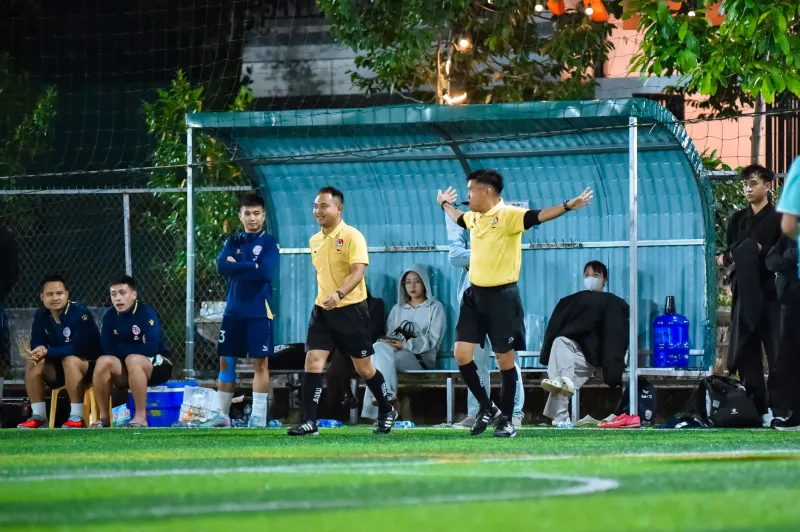
After a controversial call wipes out a goal in the 88th minute of a Champions League knockout match, the internet erupts. Fans flood social media. Pundits tear apart the on-field referee. Managers stand at the touchline looking like they've just witnessed a crime. And somewhere, in a temperature-controlled room full of monitors, the person who actually made that call is completely anonymous, completely unaccountable, and completely invisible to the entire conversation.
That's where we are with VAR in 2025. The technology was supposed to fix soccer's officiating problem. Instead, it quietly created a new one — and tucked it behind a wall of institutional opacity that nobody seems particularly interested in tearing down.
The Power Nobody Wants to Name
Here's what a lot of casual American soccer fans don't fully grasp about how VAR actually works. The video assistant referee isn't just a passive second opinion. In practice, the VAR operator — the person reviewing footage in the video operations room — controls what angles get shown, what incidents get flagged, and how long the review process runs. The on-field referee technically makes the final call, but by the time they're walking to the monitor for an on-field review, the narrative has already been shaped by whoever's been whispering in their earpiece.
That's a staggering amount of influence for a role that gets zero public-facing scrutiny. We grade quarterbacks on completion percentage. We track NBA refs by foul call tendencies. In the NFL, officiating crews are publicly identified before every game. But in soccer, the VAR booth might as well be a black box. Operators aren't introduced to the public. Their track records aren't published. When they get it wrong — badly, consequentially wrong — there's no name to attach to the mistake.
Same Play, Different Universe
The inconsistency problem is where this really starts to unravel. Take handball calls, which have become VAR's most chaotic frontier. The rule itself is a mess, sure, but the application is what makes it genuinely maddening. A ball grazes a defender's arm in one match and play continues without a second glance. A nearly identical contact in a different stadium, different competition, different operator — suddenly it's a penalty that changes the entire trajectory of a season.
This isn't theoretical. Premier League fans lived through years of handball confusion where the same type of arm position would be called one week and ignored the next. MLS has had its own version of this whiplash as VAR has been rolled out across the league. The rule didn't change. The footage didn't change. What changed was who was in the booth.
When you can't identify the operator, you can't track their tendencies. You can't identify bias, whether conscious or unconscious. You can't hold anyone accountable for a pattern of inconsistent reviews. You're just left with chaos wearing the costume of technology.
The Accountability Gap Nobody Wants to Fill
Field referees, for all their flaws, operate in the light. They're graded by their federations after every match. Top-flight leagues in Europe rank their officials. Bad performances cost referees assignments. There's a feedback loop, however imperfect, that at least gestures toward accountability.
VAR operators exist outside that loop almost entirely. Governing bodies like UEFA and FIFA release almost nothing about who's operating the system on a given matchday, how they're trained, or how their decisions are reviewed after the fact. PGMOL in England has made some moves toward transparency in recent years, but the specifics of VAR operator evaluation remain frustratingly vague. The Professional Referee Organization, which handles officiating in MLS, similarly keeps the booth side of operations largely out of public view.
The argument from the governing bodies is usually something about protecting officials from harassment — a concern that isn't entirely without merit, given how toxic fan behavior can get. But that reasoning only goes so far. We can create accountability systems that don't require publishing a home address. Releasing post-match operator grades, publishing review decision rationales, or even just identifying which officials worked which games would be a start. Instead, the default is silence, and silence is doing a lot of heavy lifting to protect a system that keeps making the same mistakes.
When Anonymous Decisions Decide Championships
This would be a minor annoyance if the stakes were low. They're not. VAR calls have decided Champions League ties. They've handed out or denied league titles. In the 2023 Women's World Cup, VAR decisions drew international scrutiny in knockout rounds, with entire national fanbases demanding explanations that never really came. The 2026 World Cup is coming to American soil, which means US audiences are about to be introduced to high-stakes VAR drama on the biggest stage the sport has. When that inevitable controversy lands, fans here are going to want answers — and they're going to find the same wall everyone else has been hitting.
American sports culture, for all its flaws, generally demands that power come with a name attached. We know who the officials are. We argue about them specifically. We build narratives around their calls over time. Soccer's VAR structure is almost allergically opposed to that kind of transparency, and it shows in how poorly the system is trusted even by fans who support the concept of video review in principle.
Fix the Room, Not Just the Rule
The path forward isn't complicated, even if it's politically difficult within soccer's governing structures. Operators need to be publicly identified, the same way on-field referees are. Their decisions need to be reviewed and graded with the same rigor applied to the rest of the officiating crew. And those grades need to be made available — not necessarily in real time, but in a way that allows independent analysis and genuine accountability over a season.
Beyond that, the criteria for what triggers a VAR review need to be codified and standardized at a level that reduces operator discretion. Right now, the system gives too much unchecked latitude to individuals whose judgment we can't evaluate because we don't even know who they are.
Soccer is a global sport with billions of invested fans. The moments VAR intervenes in are often the most important moments the game produces. Letting anonymous operators make those calls without any public accountability isn't caution — it's negligence dressed up as process.
Somebody's in that booth. It's time we started talking about them like it matters. Because it does.